Projects
My research centres on developing new methods, implementing new models, and enhancing workflows to bridge the scales between theory and experiment. Research topics focus on pressing challenges in catalysis, energy, materials, and the natural world. I deepen our understanding of processes such as chemical reactions, the effects of microstructure, nucleation, and degradation.
Last updated: 2026-09-24
Last updated: 2026-09-24
The future of modeling experiments
Project Highlights
Simulated Experiment
Computational material synthesis
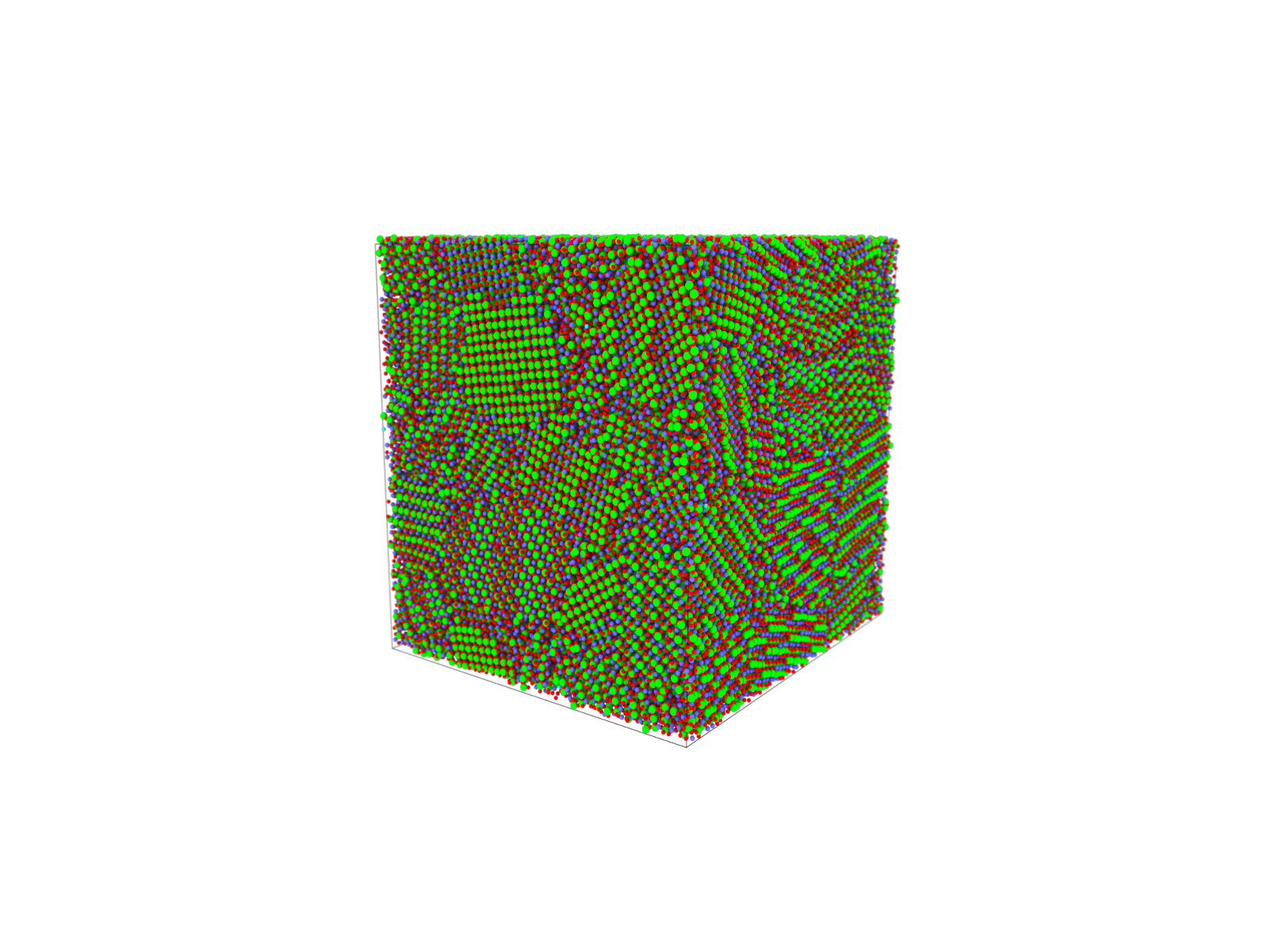
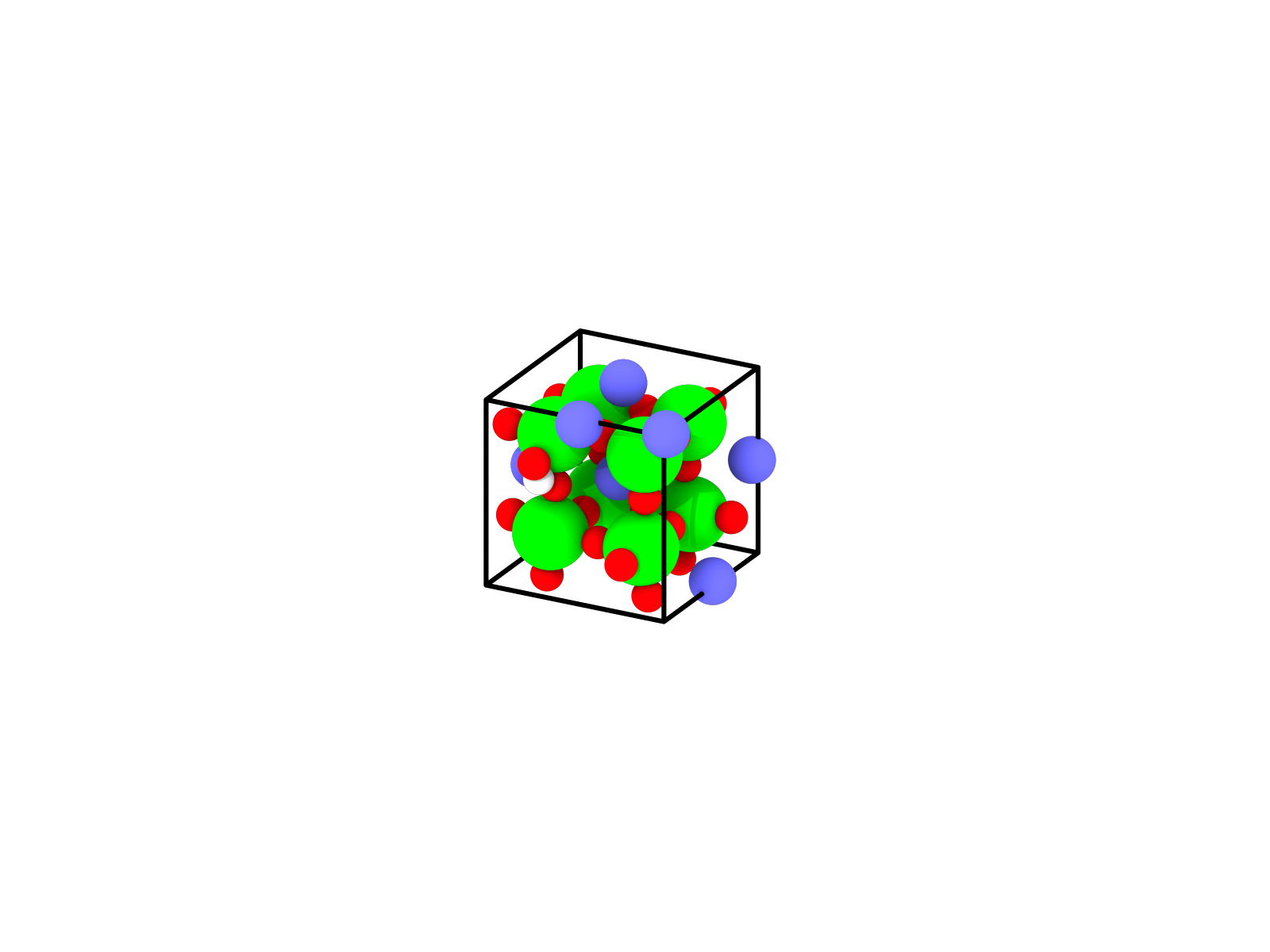
Efficient proton transport is essential for advancing solid-state fuel cells and electrolyzers, yet the mechanisms governing proton diffusion in polycrystalline barium zirconate (BaZrO3) remain incompletely understood. Experimental and theoretical studies often report discrepancies in the activation energy of proton diffusion, primarily due to limitations in modeling complex microstructures, such as grain boundaries and defects, at relevant time and length scales. With the high dimensionality of grain boundaries, new models are required to accurately capture the microstructure of polycrystalline barium zirconate.
I simulated a barium zirconate powder under high pressure and temperature to simulate pellet formation via hot press. The pseudo-pellet is then considered for its microstructure and proton transport properties. With this consideration, we can better describe the proton transport properties of polycrystalline barium zirconate.
Calculating the Activity of a Single Atom Alloy Nanoparticle
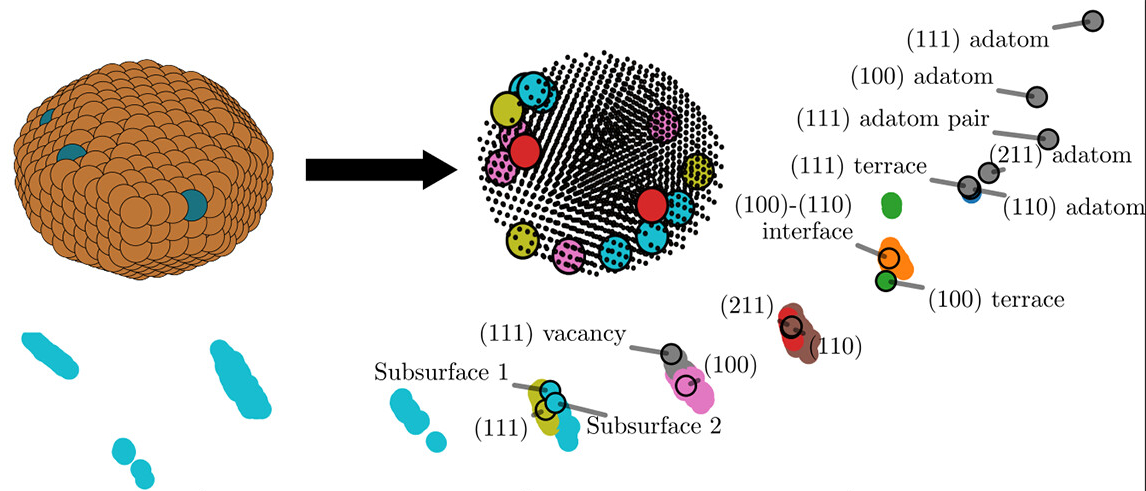
Combining active site sampling and microkinetics to get nanoparticle activity
Single atom alloys are unique as the only catalytically active sites are single atoms. This highly localized activity allows "simpler" kinetics due to the reactivity of the single atom being more homogeneous-like than heterogeneous in nature. Removal of surface diffusion allows the total rate equation to be simplified to the sum of probabilities of a dopant atom being in a surface site and the reactivity of that site. With this, I sampled the active sites of the nanoparticle using a machine learning interatomic potential. I then classified the sites using machine learning. To get the reaction rates, I used density functional theory, along with microkinetic modeling within the mean field approximation. This gave a total reaction rate for the whole nanoparticle catalyst.
Natural Phenomena at Scale
Contrails from first principles
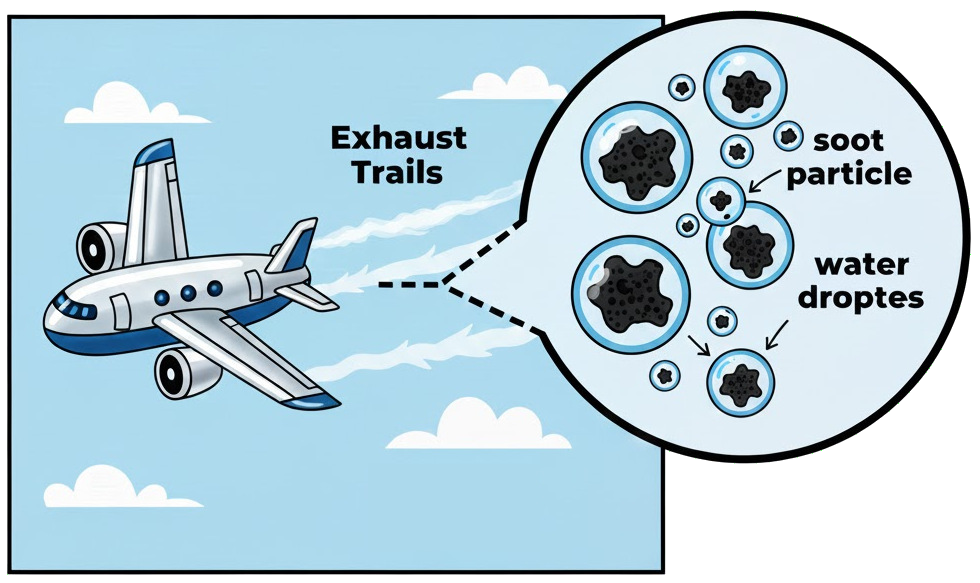
With water being the most abundant liquid on Earth's surface, ice nucleation is a critical process that continually changes the environment that we live and experience. It dictates the outcome of life itself, from the inhibition of ice nucleation through antifreeze proteins in cryophilic life combating sub-zero conditions, to the formation of snow in a treacherous blizzard. Beyond natural scenarios for ice nucleation, there are also anthropogenic causes. An example acutely tangible to us can be observed when a jet aircraft flies overhead: contrails.
With experimental EDS data as an input, I performed simulated annealing with a developed Machine Learning Interatomic Potential to generate experimentally characteristic atomistic structures of soot. I could quantify ice nucleation to classify specific surface sites that drive nucleation. With this, the nucleating ability of soot from different fuels could be considered.
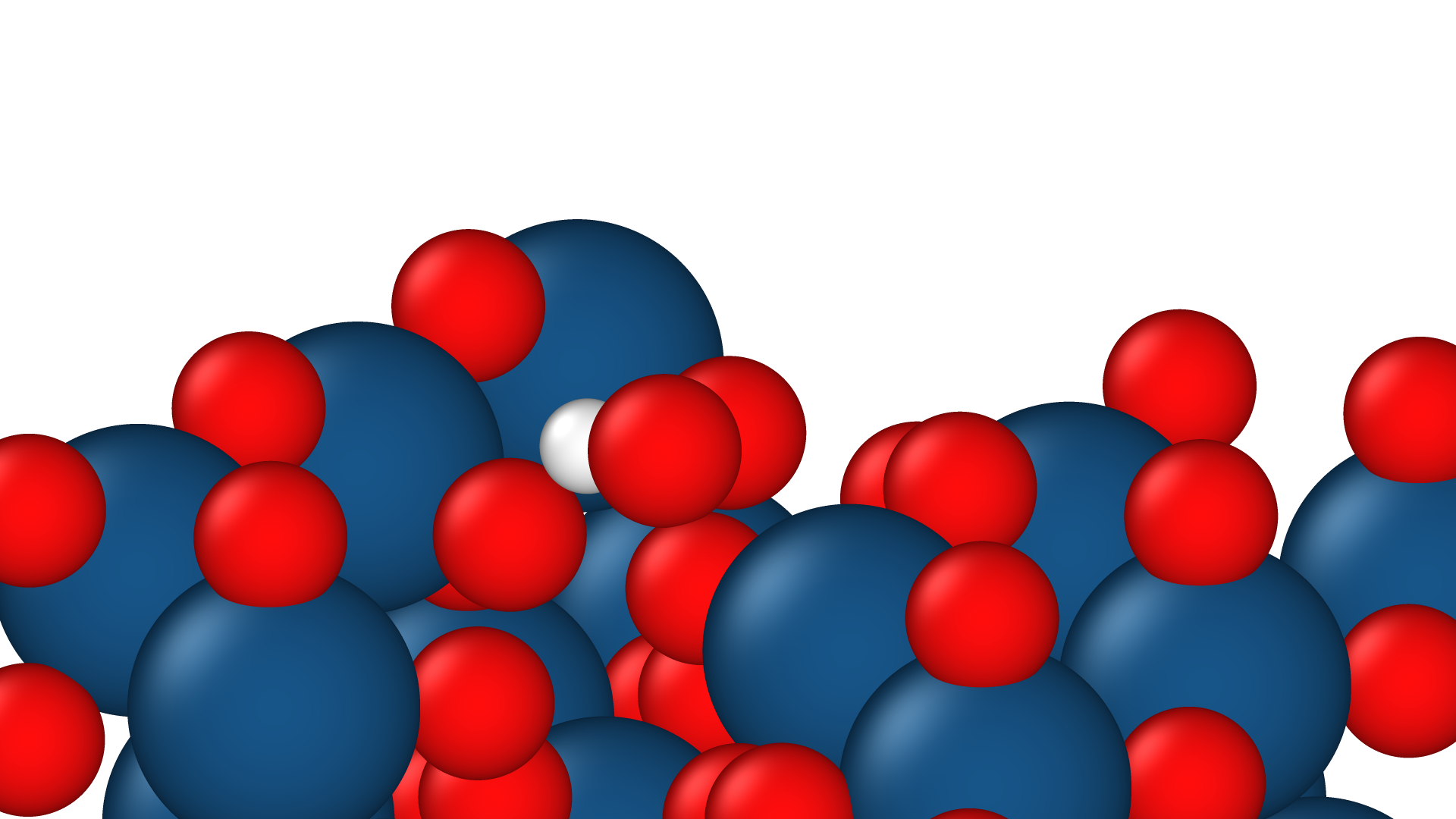
Reactivity of IrO2 undergoing dissolution
Coupling surface degradation and chemical activity with developed graph kinetic Monte Carlo
Catalysts are dynamic systems; if the rate of reaction changes, the catalyst changes. Despite this, models are often built assuming that the catalyst is static. This is most notable in electrocatalysis, where degradation and dissolution of the catalyst under potential is an expected occurence. Here, I employ a graph kinetic Monte Carlo method to model the reaction of OER on IrO2 while undergoing dissolution.
Traditional kinetic Monte Carlo assumed fixed lattice points and processes. With my method, that I call graph kinetic Monte Carlo, I can model a changing lattice by doing neighborhood analysis every time a new reaction occurs. With kinetic parameters generated for each possible surface state using DFT, along with the free energies of dissolution, both the reactivity and the degradation are coupled together. My method could be applied to other processes, such as oxidation/rusting, surface restructuring, and out-of-equilibrium reactions.